Painted cabinets can make a kitchen feel new without the cost of replacing them. But cabinets are also the hardest-working painted surface in your home: opened and closed all day, touched with hands that have just handled food, and wiped down again and again. A cabinet job that looks great on day one and chips by next spring was usually decided by what went on underneath the color.
Here’s what a lasting job includes, the questions worth asking any painter, and how we do it.
Why cabinets aren’t like walls
Walls get a wipe now and then. Cabinet doors and drawer fronts get gripped, bumped, and scrubbed every day, so the paint needs to bond well and cure into a hard, washable surface. That is why the process matters more than the color: a good finish is a system of surface prep, primer, and the right kind of paint, applied carefully.
What a lasting cabinet job includes
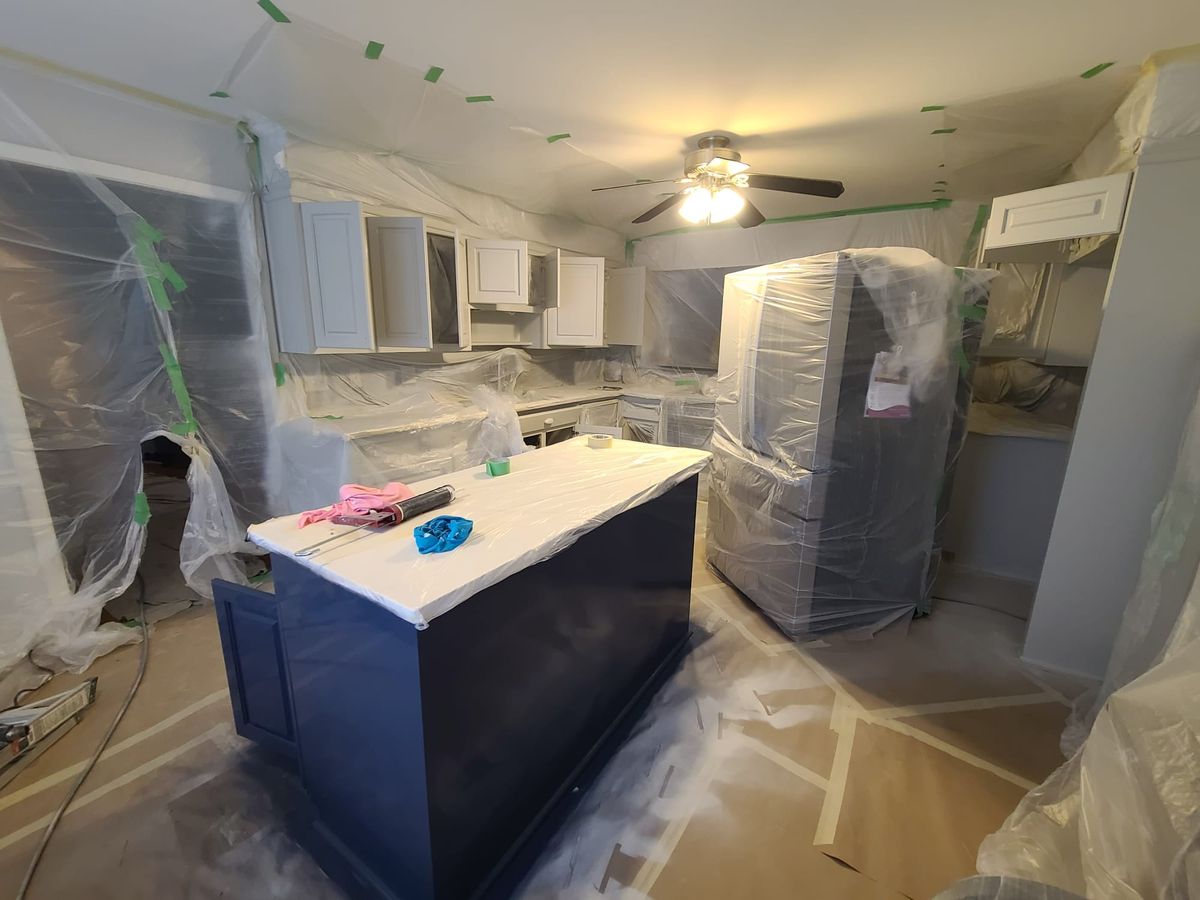
- Everything around the cabinets is covered, and the surfaces are properly prepped before any primer goes on. Skipped prep is a common reason cabinet paint fails.
- A primer made for the job. We use high-quality oil- or lacquer-based primers, so the finish bonds and lasts.
- A durable enamel, not wall paint. We use high-quality alkyd enamels, such as Sherwin-Williams Emerald and Benjamin Moore Advance, usually in a satin sheen: tough and easy to wipe down, without the glare of high gloss.
- A smooth, even application. About 90% of the time we spray, which leaves a smooth finish with no brush marks; we brush or roll only in hard-to-reach spots.
- Nothing leaves your property. Doors are sprayed while they hang on the cabinets, or in your garage or a taped-off area, so your doors never go anywhere.
Questions to ask any cabinet painter
Two quotes can look the same on paper and be very different jobs. Ask:
- What primer and what finish will you use? A good answer names the product and why it suits cabinets. “Regular paint” is not an answer.
- Will the cabinets be sprayed or brushed? Both can work, but you should know which, and why.
- Where will the doors be painted? On site, or taken away to someone else’s shop? Knowing who has your doors, and for how long, matters.
- How will you protect the rest of my kitchen? Painting makes dust and overspray; a careful painter covers everything and tells you how.
- What does the warranty cover, in writing? Limited warranty: 3 years on newly painted non-flooring surfaces, 1 year on stained surfaces and flooring. See our full warranty.
For more on what to ask before you hire anyone, see our guide to choosing a painting contractor.
Picking the color
Cabinet color shapes the whole kitchen, and it reads differently with your counters, floors, and light. Try big samples on a door and look at them morning and evening, as we describe in how to choose interior paint colors. Our work gallery has finished kitchens in white and in two-tone combinations if you want to see how they look in real homes.
Homes built before 1978
We’re not a lead-safe certified (RRP) firm, and Georgia’s rules treat repainting a home built before 1978 as regulated work. We can take on a home that age only after a certified renovator has tested it and found no lead-based paint, or for minor work within Georgia’s small-area limits. Tell us when you request your estimate, and we’ll tell you whether we can help.
Ready for a fresh kitchen?
See more about our cabinet painting. Here’s what you get from us:
- A family member on every estimate.
- No hidden costs: labor, paint, materials, and taxes are included unless the scope says otherwise.
When you’re ready, get a free estimate.