Ask any experienced painter which part of an exterior job matters most and you’ll hear the same answer: prep. Painting is the easy part. Most early peeling, cracking, and fading traces back to a surface that wasn’t ready for paint.
Prep is also the most time-consuming part of our exterior jobs. Here’s what it includes, and why each step is worth the time.
1. Pressure washing
Paint can’t bond to dirt, pollen, mildew, or chalky old paint. Our exterior jobs start with a thorough pressure wash, then time to dry before anything else happens.
We ask that someone be home on pressure-washing day, and that window screens are unlocked from the inside.
2. Scraping where needed
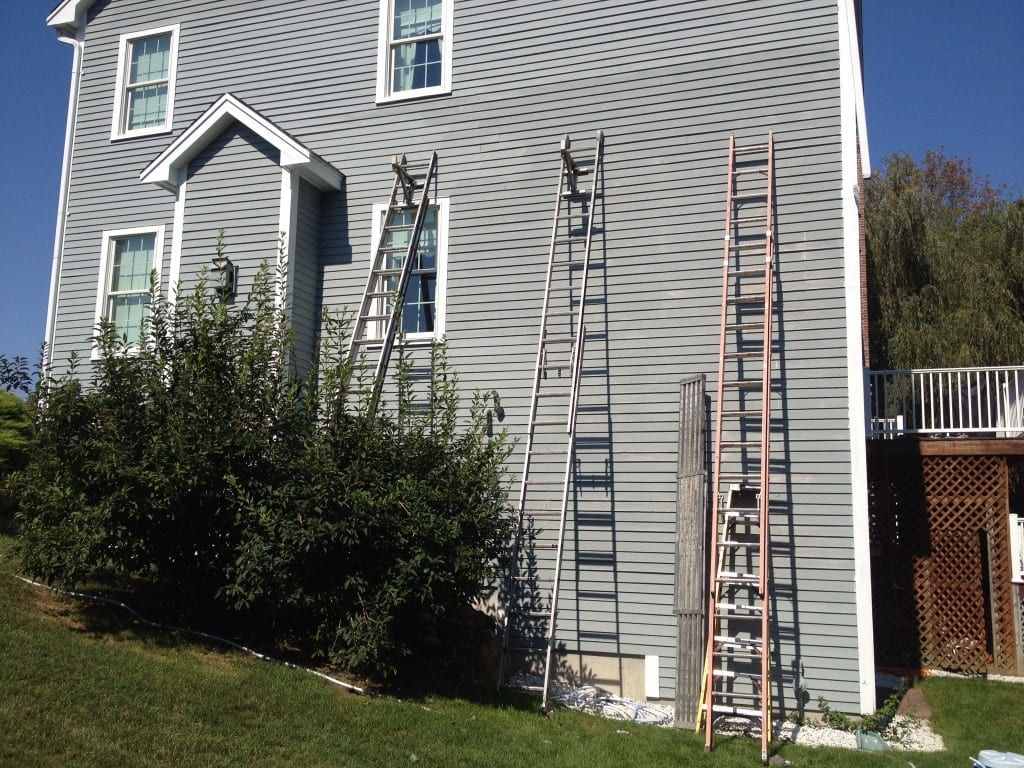
Any paint that’s loose, flaking, or peeling comes off. New paint is only as strong as the layer underneath it, so painting over loose paint just means it peels again, taking the new coat with it.
3. Light sanding
Scraped edges and rough spots get a light sanding so the new paint lays smooth and doesn’t show ridges where old paint used to be.
4. Repairs
Soft or rotted wood on trim, siding, or fascia is repaired before painting; painting over rot only hides it for a while. Wood repair is part of our exterior painting work. For homes built before 1978, see the section below.
5. Spot priming bare surfaces
Bare wood and repaired spots soak up paint unevenly and don’t hold it as well. Spot priming them first gives the topcoat an even surface to grip, so the color looks the same everywhere.
6. Covering everything
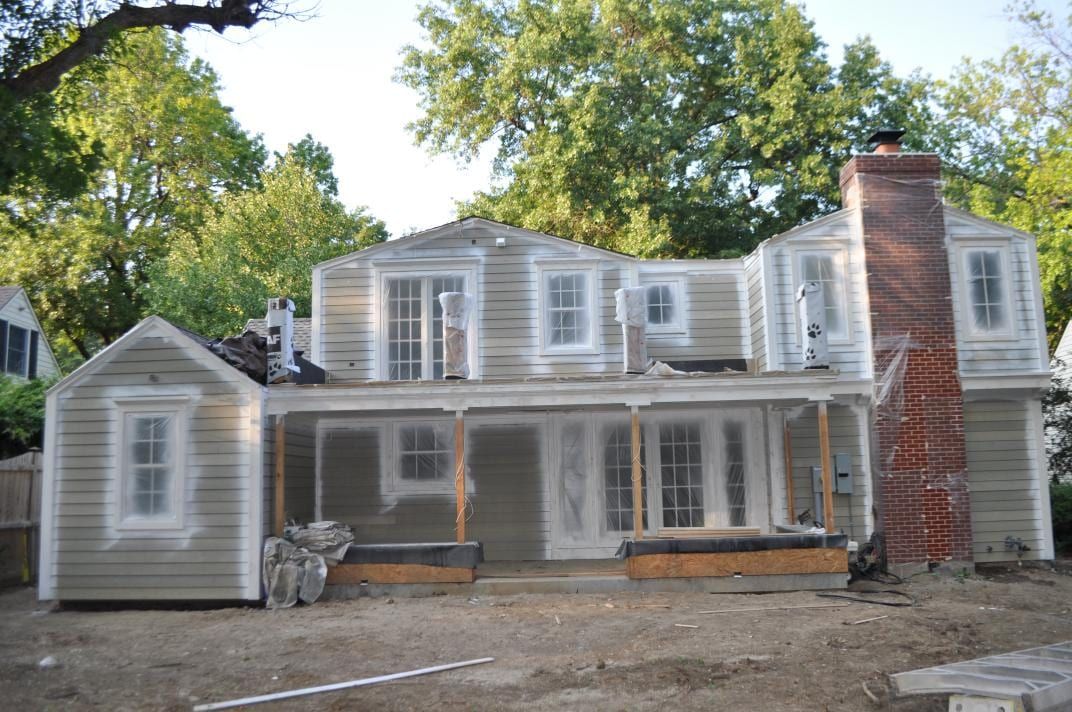
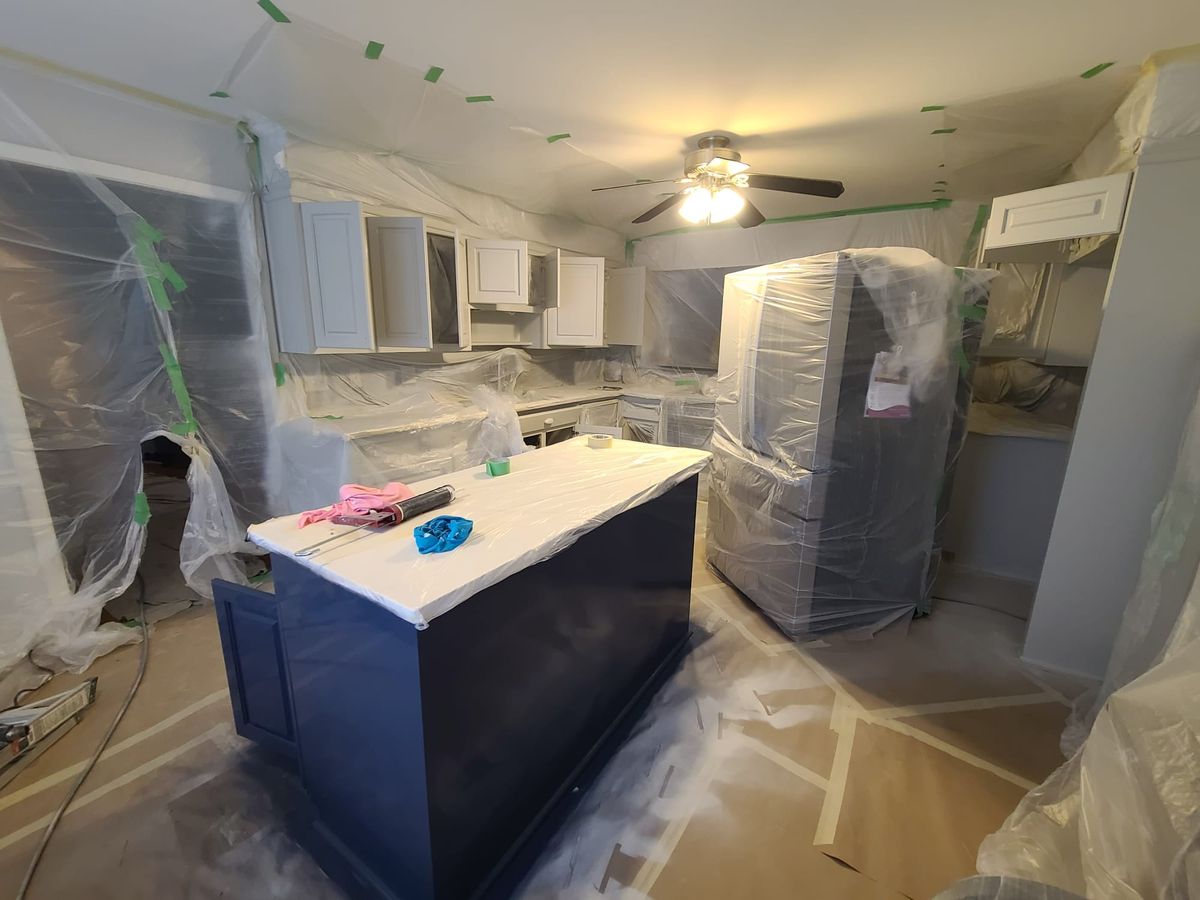
When we spray, everything that isn’t getting paint is covered properly: windows, doors, light fixtures, walkways, and plants near the house. Good covering is what keeps overspray off your car and your neighbor’s fence.
Homes built before 1978
We’re not a lead-safe certified (RRP) firm, and Georgia’s rules treat repainting a home built before 1978 as regulated work. We can take on a home that age only after a certified renovator has tested it and found no lead-based paint, or for minor work within Georgia’s small-area limits. Tell us when you request your estimate, and we’ll tell you whether we can help.
How you can help
A few things make prep go faster on your end:
- Cut shrubs back about 2 feet from the house.
- Move furniture off the patio or deck.
- Unlock window screens from the inside.
- Tell us about any badly rotted wood or water leaks around windows, doors, or ceilings before we start.
Is your paint telling you it’s time?
If you’re seeing fading, peeling, or soft wood, read the signs it’s time to repaint, or skip ahead and get a free estimate.